How to Connect Your Data Center AssetS to Wastetide and Plan End-of-Life Equipment Worldwide
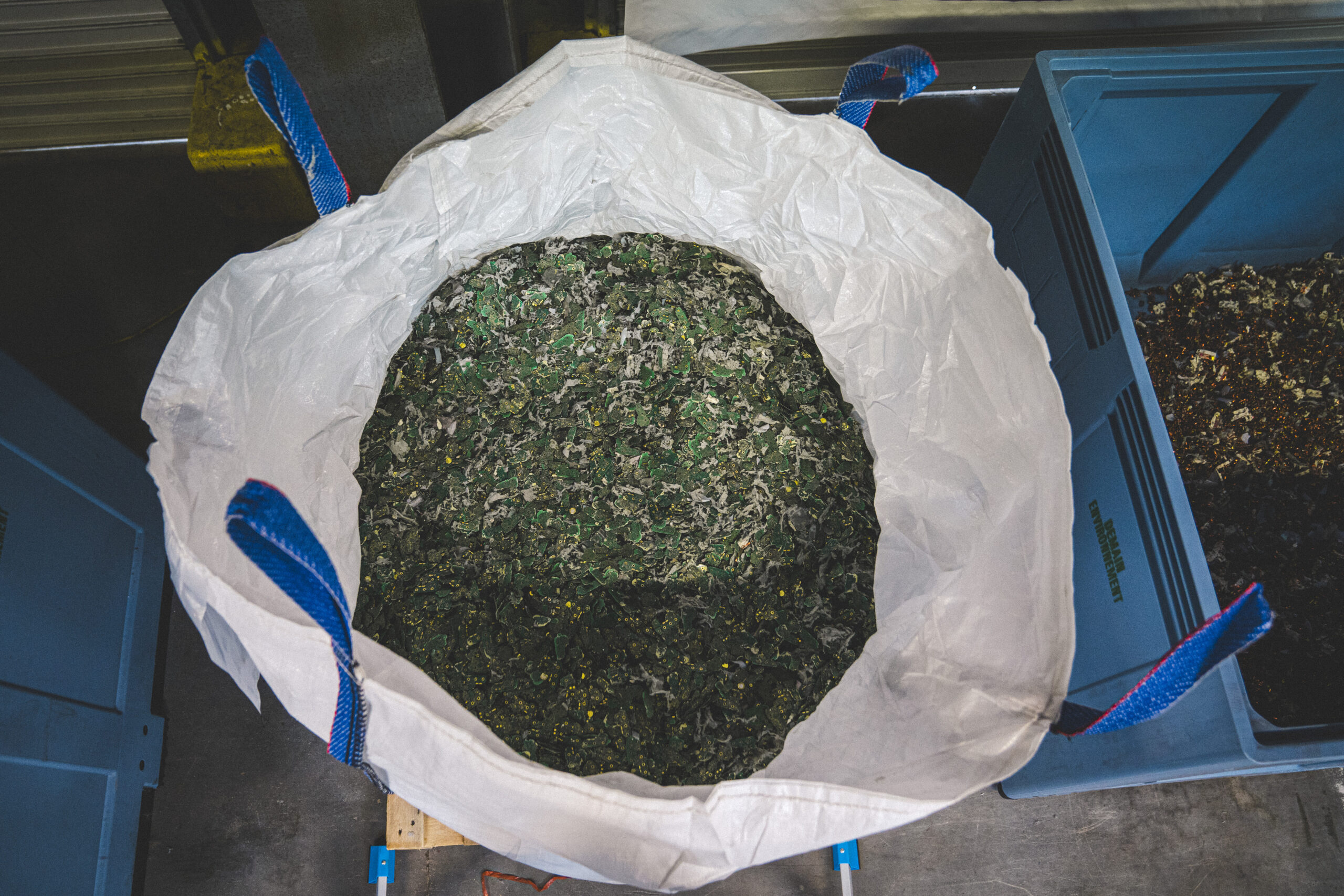
TL;DR for data center EHS and operations teams: Your DCIM software already holds your inventory equipment: serial numbers, models, locations and lifecycle status. What it lacks is how much value you could recover from your end-of-life equipments and the regulatory compliance once it becomes waste.
Just connect to your Data Centre Infrastructure Management Software (Schneider Electric Ecostruxure, Sunbird, IBM Maximo, etc) and let Wastetide estimate value, find buyers, prepare the tracking documents each country requires and generate CO2 footprint reduction certificates.
Plan before the refresh, not at the loading dock.
Why this matters now
- The world generated a record 62 million tonnes of e-waste in 2022; only 22.3% was documented as formally collected and recycled.
- In the US and EU, 95% of datacenters still handle waste and end-of-life equipments with an Excel or a paper sheet.
- Rates vary hugely by region: under 1% documented in African countries. Where your site is changes what "recycled" really means.
- From our clients' data, Wastetide's projects the recyclable value of Gen-AI e-waste to rise to €1.5 billion by 2030.
What your DCIM knows, and what it does not
A Data Center Infrastructure Management Software record tells you a server is in rack 14 and draws 400 watts, not that its resale value will evaporate at the next refresh. DCIM platforms track assets to decommissioning and can sync lifecycle status with CMDB tools such as ServiceNow (Sunbird), but they do not remove equipment, destroy data or certify outcomes.
The 6-step method
- Add retirement fields in DCIM: planned retirement date, data-bearing (yes/no), sanitization status, battery chemistry, refrigerant charge for cooling units.
- Export a retirement list each quarter (CSV or API): asset tag, serial, make, model, configuration, quantity, site and country.
- Upload it to Wastetide with recent ITAD settlements and waste invoices. Wastetide estimates the value of equipment and components and finds buyers ready to offer the best price (material identification).
- Route by country. Hazardous streams leave with the national record: e-Manifest in the U.S. (guide), Trackdéchets in France (guide), Digital Waste Tracking in the UK, and DIWASS for cross-border EU shipments.
- Keep data security separate. Sanitize media with NIST SP 800-88 and keep a serial-linked certificate per asset; a waste record is not proof of data destruction.
- Close the loop. Push realised value, destination and CO2 back to DCIM or ITAM so the next procurement uses real recovery benchmarks.
- None of the above :) Wastetide can connect directly to your DCIMS via an API and anticipate any time an old chiller needs to leave your DC, or anytime a client of yours asks for a component to be replaced.
[[button-1]]
Batteries and cooling: the hazardous part
UPS batteries and chillers are where compliance risk concentrates. Read our guides on lithium-ion UPS batteries, ADR 2027 battery rules and retiring cooling equipment under the AIM Act.
" I NEED YOU Anywhere on the planet": be precise
Wastetide works primarily across Western Europe (France, UK, Belgium, Netherlands, Germany) and the U.S., and opens other geographies on request for client sites. Before a refresh in a new country, we check three things: a national tracking system, certified local recyclers or a lawful export route, and the evidence your auditors will accept.
[[button-2]]
FAQ
Can a DCIM plan IT asset disposition on its own?
No. DCIM documents inventory and lifecycle status; physical removal, data destruction, chain of custody and certificates come from ITAD and waste partners.
Which DCIM fields matter for recycling?
Serial number, model and configuration, site and country, retirement date, data-bearing status, and battery chemistry or refrigerant charge where relevant.
Does Wastetide destroy data?
Data destruction is performed by certified ITAD providers; we keep device-level certificates separate from waste records.
How much e-waste is recycled worldwide?
22.3% of the 62 million tonnes generated in 2022 was documented as formally collected and recycled, according to the Global E-waste Monitor 2024.
Informational, not legal advice.
You may like
Turn waste into opportunity.
Hack the flow.
Join Wastetide.
At Wastetide, we turn discarded materials into new possibilities.
We combine responsible sourcing and bold design to transform waste into meaningful, sustainable value.
