PFAS Waste in 2026: What EPA's New Disposal Guidance and Minnesota's Deadline Mean for EHS Teams
TL;DR for EHS managers: There is still no federal rule that makes PFAS-containing waste a RCRA hazardous waste, and in May 2026 EPA withdrew a related corrective-action proposal. But that is not a green light. EPA's April 28, 2026 interim disposal guidance tells you which outlets have the lowest release potential, PFOA and PFOS remain CERCLA hazardous substances after a federal appeals court upheld the designation in August 2026, and in Minnesota the last extended deadline for PFAS-in-products reports falls on December 14, 2026. Your disposal choices today are tomorrow's liability file.
What changed in 2026
- New disposal guidance (April 28, 2026). EPA's third interim guidance is non-binding and does not set requirements, but it points to three options with lower potential for PFAS release: Class I underground injection wells, RCRA-regulated hazardous waste landfills, and hazardous waste combustors operating under specific conditions (EPA). It adds a technology evaluation framework, and in 2026 EPA neither recommends nor discourages emerging destruction technologies (EPA guidance PDF). Updates are now annual instead of every three years.
- RCRA: still no PFAS hazardous waste listing. On May 8, 2026, EPA withdrew its proposal clarifying corrective-action authority, saying existing rules were adequate (SCS Engineers). The separate February 2024 proposal to list nine PFAS as hazardous constituents is not final; the 2026 Unified Agenda targets January 2027 (Bergeson & Campbell). Even if finalized, it would not trigger cradle-to-grave hazardous waste controls (EPA).
- CERCLA liability stays. The PFOA/PFOS hazardous substance designation was upheld in August 2026. Spent carbon, resins and membrane concentrates can carry PFOA and PFOS, so releases from them fall within the designation even though they are not automatically RCRA hazardous waste (Environment+Energy Leader).
- TRI keeps growing. PFAS are chemicals of special concern under TRI, which removes some low-concentration reporting exemptions (IHMM), and EPA added PFHxS-Na to the list in February 2026 (EPA). TRI Form R includes waste management quantities, so your disposal data feeds your filing.
Midwest focus: Minnesota's Amara's Law
Initial reports on products with intentionally added PFAS were due September 15, 2026; manufacturers granted the single 90-day extension must file by December 14, 2026 (MPCA). MPCA expected over 5,000 manufacturers to report, reports are public except trade secrets, and annual updates are due each February 1 under a stricter due-diligence standard (RVIA). A 2026 amendment excludes products made before July 1, 2023 (Fox Rothschild). This is a product law, not a waste law, but the same supplier data tells you which of your scrap, off-spec and rejected-part streams contain PFAS.
The 6-point PFAS waste checklist
- Map PFAS-bearing streams. Spent GAC, resins and filters, coating and plating residues, PTFE scrap, off-spec parts, and legacy AFFF concentrate if your site still stores it.
- Reuse your supplier data. Amara's Law and TSCA outreach already collected SDS and supplier declarations: link them to waste profiles.
- Document the outlet choice. Record why you chose a hazardous waste landfill, combustor or Class I well, using EPA's 2026 framework. EHSLeaders recommends defensible, documented decisions and due diligence on disposal providers.
- Audit your vendors. Ask for permit conditions, destination facility and certificates of disposal or destruction.
- Watch your state. State rules can diverge from the federal baseline: federal compliance is not state compliance (IHMM).
- Track cost per ton. PFAS-capable outlets are limited; reconcile invoices against contracted rates and avoid paying PFAS prices for streams that do not contain PFAS.
[[button-1]]
Where Wastetide fits
PFAS compliance is a data problem: supplier declarations, waste profiles, manifests and invoices live in different places. Wastetide reads waste invoices, contracts and registers to produce clean, audit-ready data (automated, compliant data), flags gaps between billed and contracted prices (contract monitoring), and identifies recyclable materials that should not be leaving in costly mixed or hazardous streams (material identification). Related reads: EPA's paper manifest sunset rule and lithium-ion UPS battery waste in data centers.
[[button-2]]
FAQ
Is PFAS waste a RCRA hazardous waste?
Not by federal listing as of November 2026. A PFAS-containing waste can still be hazardous if it is listed or shows a hazardous characteristic for other reasons, and states may be stricter.
What does EPA recommend for PFAS waste disposal?
EPA's 2026 interim guidance identifies Class I injection wells, RCRA hazardous waste landfills and hazardous waste combustors under specific conditions as having lower release potential. It is non-binding.
When is the Minnesota PFAS report due?
Initial reports were due September 15, 2026; manufacturers with an approved 90-day extension must report by December 14, 2026. Updates are due each February 1.
Does the CERCLA designation affect waste generators?
Yes, potentially. PFOA and PFOS are CERCLA hazardous substances, so releases from wastes containing them, such as spent treatment media, can create cleanup liability.
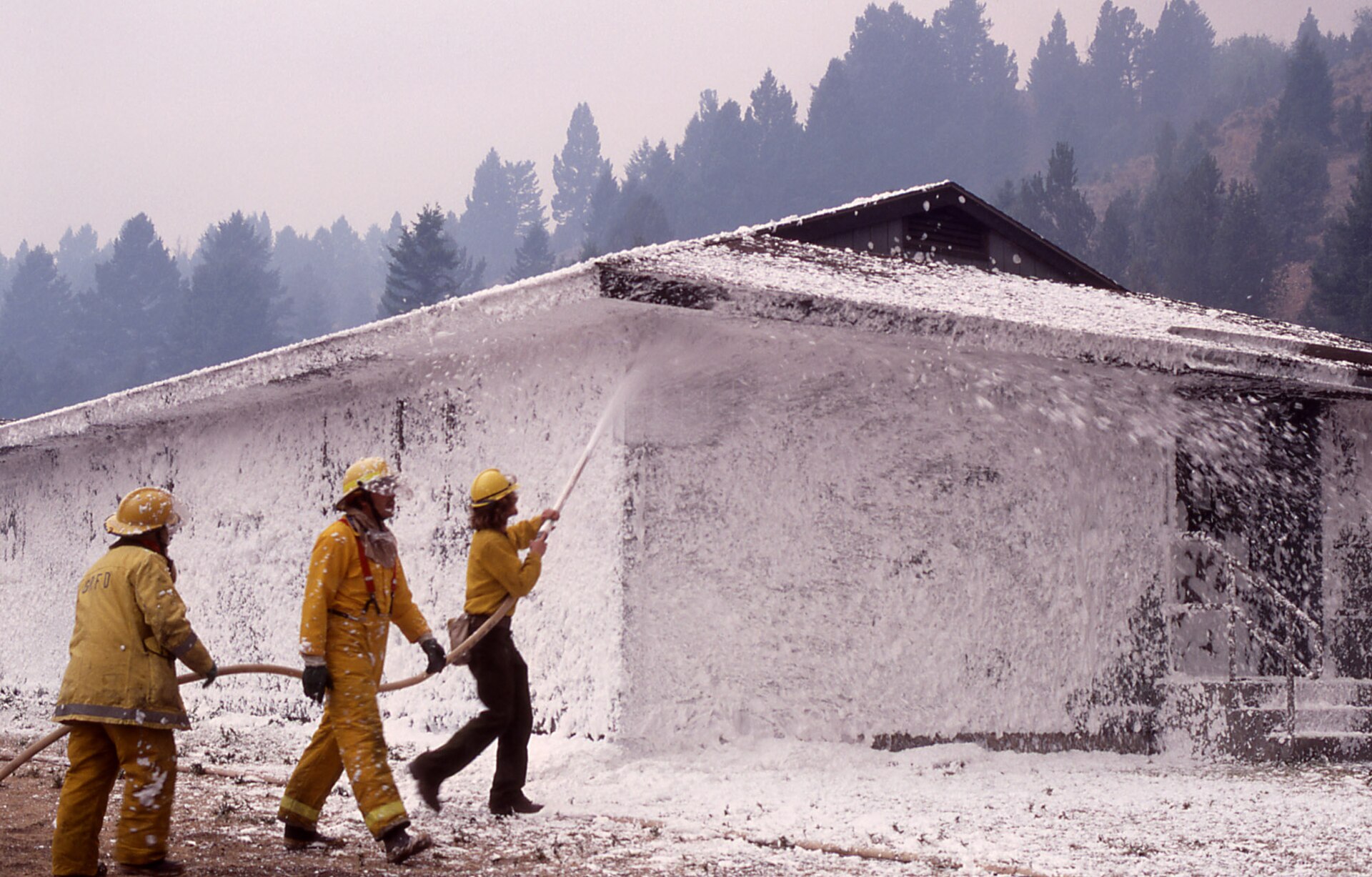
Sources: U.S. EPA (2026 Interim PFAS Destruction and Disposal Guidance, news release April 28, 2026; Key EPA Actions on PFAS; RCRA hazardous constituents proposal page); Federal Register 2026-08174; SCS Engineers; Bergeson & Campbell (2026 Unified Agenda); Minnesota Pollution Control Agency; RVIA; Fox Rothschild; Beveridge & Diamond; IHMM (Aug. 2026); Environment+Energy Leader; EHSLeaders. Image: "Firefighters spray foam", Jim Peaco, U.S. National Park Service, 1988, public domain, via Wikimedia Commons. This article is informational and not legal advice.
You may like
Turn waste into opportunity.
Hack the flow.
Join Wastetide.
At Wastetide, we turn discarded materials into new possibilities.
We combine responsible sourcing and bold design to transform waste into meaningful, sustainable value.
