Scope 3 Category 5 (Waste): How to Calculate Emissions from Your Invoices and Waste Registers
TL;DR: Scope 3 Category 5 is the emissions from third-party treatment of waste generated in your operations. Multiply tonnes of each waste type by an emission factor for its treatment route, or collect data from your waste providers. The hard part is not the formula; it is getting reliable tonnages and treatment routes per stream.
The three GHG Protocol methods
The GHG Protocol technical guidance allows three methods (GHG Protocol, Category 5):
- Supplier-specific: collect waste-specific Scope 1 and 2 data directly from treatment companies. No emission factors needed.
- Waste-type-specific: emission factors for each waste type and treatment method. Formula: Σ (tonnes of waste type × emission factor of its treatment method).
- Average-data: total waste per disposal method × average factors, useful when waste types are unknown.
Transport of waste is optional and is accounted under Category 4.
Where your data already is
The guidance notes that because operators often charge by disposal method, treatment routes may be identified on bills. In practice, three sources cover most of what you need: hauler invoices (streams, routes, sometimes weights), scale tickets, and your waste register or manifests. Leased sites are the usual gap.
Three traps that fail assurance
- Claiming recycling credits in Category 5. Emissions from recycling and waste-to-energy appear close to zero in Category 5; the guidance suggests reporting additional information separately. Avoided-emission claims belong outside Scopes 1-3. The GHG Protocol recommends the recycled content (100-0) approach to avoid double counting (Climate Activator).
- Using EPA WARM as an inventory tool. EPA states WARM is a comparative tool and should not be used for GHG inventories (EPA WARM v16 user guide). Use it to compare scenarios, not to fill your Category 5 line.
- Estimated tonnages. If invoices are billed by volume or estimated weight, your Category 5 inherits the error. Ask for scale tickets.
[[button-1]]
A 5-step workflow
- List every site, hauler and stream.
- Extract tonnage and treatment route per stream from invoices, tickets and registers.
- Choose the method per stream: supplier-specific where providers report, waste-type-specific elsewhere.
- Document emission factor sources and versions.
- Recalculate the base year if data quality changes significantly, as the guidance requires.
Where Wastetide fits
Wastetide extracts tonnages, streams and treatment routes from waste invoices, contracts and registers into audit-ready data (automated, compliant data) and identifies streams that could be recycled or sold instead of landfilled (material identification). Data center teams: see our e-waste report.
[[button-2]]
FAQ
What is Scope 3 Category 5?
Emissions from the disposal and treatment of waste generated in your operations, when treatment is done by third parties.
Which method should I use?
Supplier-specific data where your waste providers can supply it; otherwise the waste-type-specific method. Use the average-data method only when waste types are unknown.
Can I use EPA WARM factors for my GHG inventory?
EPA says WARM was not developed for GHG inventories; it is a comparative tool for materials management scenarios.
Does recycling reduce my Category 5 emissions?
Recycling appears close to zero in Category 5, but avoided emissions must be reported separately, not netted against your inventory.
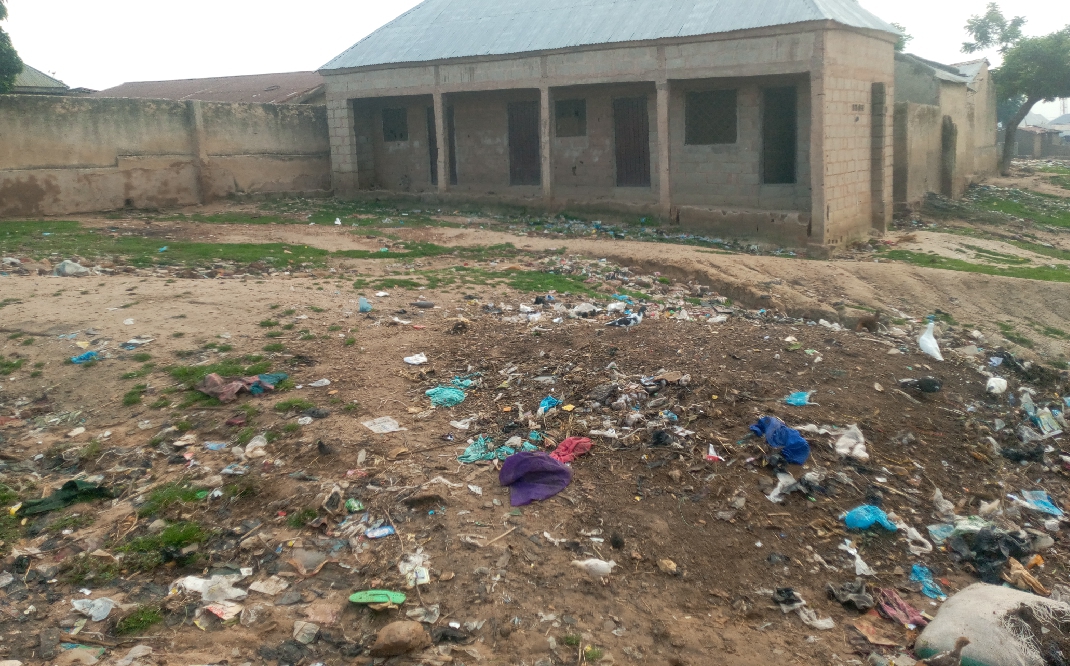
Sources: GHG Protocol Technical Guidance for Calculating Scope 3 Emissions (Category 5); U.S. EPA WARM v16 documentation; Climate Activator guidance. Image: "Waste dump area", Wikimedia Commons, CC0. Informational, not assurance advice.
You may like
Turn waste into opportunity.
Hack the flow.
Join Wastetide.
At Wastetide, we turn discarded materials into new possibilities.
We combine responsible sourcing and bold design to transform waste into meaningful, sustainable value.
